
Provisional Fellowships
The provisional fellowship year (PFY) program is open to ANZCA trainees who have completed their advanced training, working towards completion of their FANZCA. Trainees working towards the pain fellowship (FFPMANZCA) should contact the Pain Management Research Institute.
Our department usually employs 7 fellows each year. The program allows fellows to gain a broad depth of experience in all the sub-specialties offered at RNSH, while promoting the transition from registrar to consultant in a supportive environment. While there are no formally allocated sub-specialty days, it is generally possible to accumulate a significant caseload in areas of interest through the year. Provisional fellows provide 24/7 on-site cover, working alongside our consultants and registrars in the Anaesthesia afterhours roster.
01
General Fellowship
Gain broad experience across all sub-specialties at RNSH, one of NSW’s only combined referral centres for major trauma, burns, spinal injuries, interventional neuroradiology and high-risk obstetrics.
02
Airway Fellowship
Develop advanced airway management skills working with our ENT colleagues, supported by RNSH’s high caseload of trauma, burns, and microlaryngoscopy cases.
03
Cardiothoracic Fellowship
Train in cardiothoracic anaesthesia at a centre performing over 350 cardiac surgeries and 200 TAVI procedures annually, serving a catchment of 1.3 million people.
04
Simulation Fellowship
Develop expertise in simulation-based training and patient safety, designing and delivering simulation scenarios for anaesthetists and other healthcare professionals at the Sydney Clinical Skills and Simulation Centre.

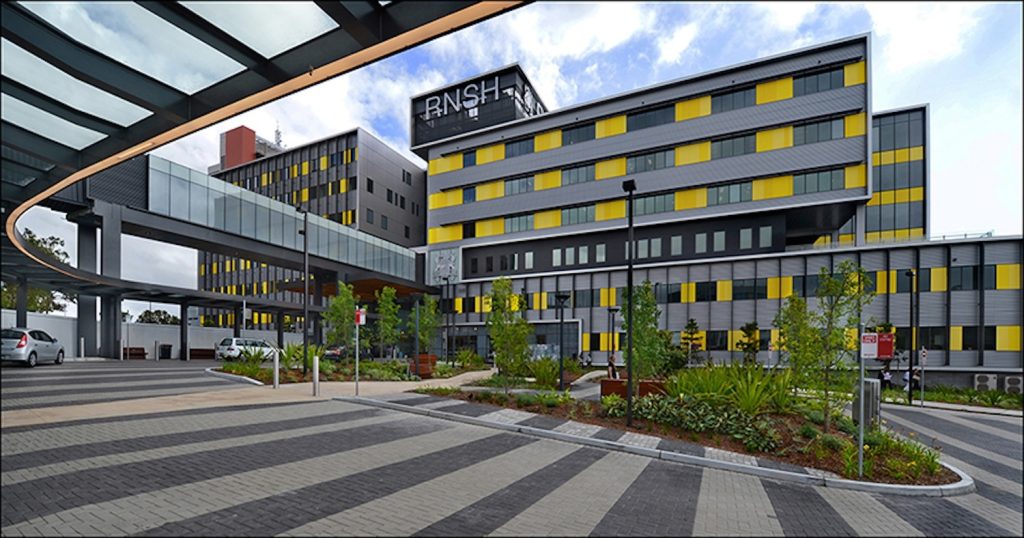
Provisional Fellowships
General
RNSH is the only tertiary hospital in New South Wales serving as a combined referral centre for major trauma, burns, spinal injuries, interventional neuroradiology, and high-risk obstetrics.
The department offers expertise across a broad range of subspecialties including intraoperative neurophysiological monitoring, complex vascular neurosurgery, and regional analgesia. All major subspecialties are available apart from transplant surgery and dedicated paediatrics, though paediatric cases are regularly encountered across ENT and orthopaedic trauma lists, with dedicated paediatric general surgery and MRI lists also available.
General fellows also have a major non clinical portfolio which include:
Provisional Fellowships
Airway
RNSH offers a moderate to high caseload of ENT surgeries including microlaryngoscopy, neck dissections, and cancer free-flap reconstructions. There are also opportunities to practice advanced airway techniques under the supervision airway experts.
Fellows spend at least two days per week on relevant surgical lists, with additional exposure through RNSH’s significant trauma, burns, and spinal injury caseload. It is expected that the airway fellow participates in the after-hours roster, in equal contribution to the general fellows.
Fellows are also involved in continuing medical education including the ATTAAC airway management course and the organisation and delivery of the quarterly RNSH Airway Round Table – a multidisciplinary case discussion involving Emergency, ICU, and ENT.
Other teaching opportunities include:
Provisional Fellowships
Cardiothoracic
RNSH is the referral centre for cardiac surgery and structural cardiology procedures for Northern Sydney and the Central Coast, serving a catchment of over 1.3 million people. The department performs approximately 350 cardiac, 200 thoracic, and 250 cardiac device procedures annually, as well as several ECMO initiations each year. This service is supported by 16 accredited cardiothoracic anaesthetists. The structural cardiology program includes over 200 TAVI procedures alongside percutaneous mitral valve interventions, left atrial appendage and septal defect closures.
Fellows spend at least two days per week in cardiothoracic anaesthesia under direct supervision, with an additional one to two days covering emergency and general theatre lists. It is expected that the cardiothoracics fellow participates in the after-hours roster, in equal contribution to the general fellows.
Fellows are expected to undertake concurrent training in Transoesophageal Echocardiography (via the University of Melbourne Postgraduate Diploma in Clinical Ultrasound or the National Board of Echocardiography), and to complete a clinical audit during their fellowship.
Provisional Fellowships
Simulation Education
This fellowship offers a unique opportunity to develop expertise in simulation as a tool for patient safety and clinical training. The program is tailored to the fellow’s interests and involves a combination of coursework, hands-on training, and supervised practice at the Sydney Clinical Skills and Simulation Centre, located on the RNSH campus.
Fellows will develop skills in designing, implementing, and debriefing simulation-based scenarios, with a focus on human factors and patient safety.
There are two full-time positions available, each comprising 0.2 FTE simulation (2 days per fortnight) and 0.8 FTE clinical anaesthesia. It is expected that the sim fellow participates in the after-hours roster, in equal contribution to the general fellows.
Courses fellows will be involved in as faculty include:
A list of our previous fellows can be found here.